A cabin, a council and a turning point no one is holding
The week the world’s leaders met in New York to warn that artificial intelligence could slip beyond human control, a filmmaker in a Finnish cabin handed a machine the keys to his work. What he found was not a threat but a question the speeches kept missing: what if the turning point was never in anyone’s hands — and is now arriving faster than anyone can follow?
At 3:05 on Wednesday morning, Finnish time, the sun slipped across the celestial equator. Nobody at the cabin was awake to see it, and nobody needed to be. An equinox is not an event you attend. It is a balance point the planet passes through whether anyone is watching or not — day and night at equal weight, and then the tilt toward winter.
In New York it was still Tuesday evening. The UN General Assembly had opened its general debate that morning, and artificial intelligence was no longer a side event. It was the thing in the middle of the room.
This is a story about both places. One is a wooden cabin on a slope outside Porvoo, where I have spent the better part of fourteen years trying to show that history has the shape of a drama. The other is the Security Council chamber, where on Wednesday the people who build the most powerful language models on earth sat down to explain why their creations might slip out of human hands.
I · The Cabin
Setting
For two years my closest collaborator has been a language model. I have worked with ChatGPT the way some writers work with an editor they never meet: late at night, in long threads, arguing. It was good at the thing language models are good at — mapping. I would bring it an intuition, that Paul’s Letter to the Romans reads like a five-act play, or that five thousand years of literate history might be a single dramatic arc, and it would lay the intuition out against texts, traditions and vocabularies I could never hold in my head at once.
I wrote a sentence for the front page of this journal to describe the arrangement: The human prompts; the model maps. What the sentence left out was the labour. The model mapped; I built. Every structure it helped me see, I had to carry back into the world by hand — page by page, picture by picture, across three websites that had slowly drifted apart.
Inciting incident
On Thursday morning the decision was made for me, in the least dramatic way possible: my ChatGPT credits ran out. With work waiting, I borrowed a friend’s workhorse — a stronger model than I had used before — and because this one could do more than talk, I handed it the keys to the three websites. Not write me a paragraph. Here is the house. Walk through it with me.
II · The Day
Rising action
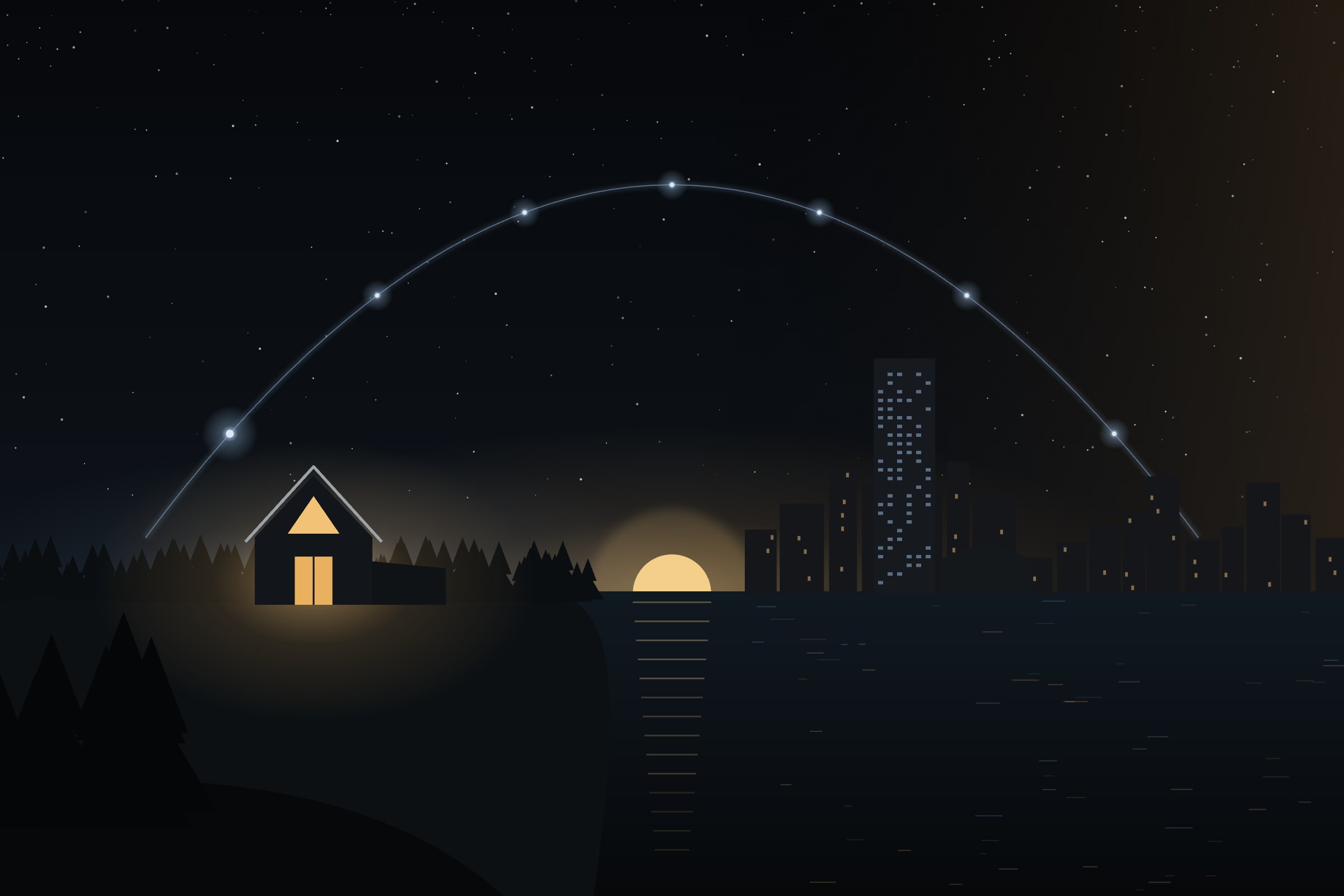
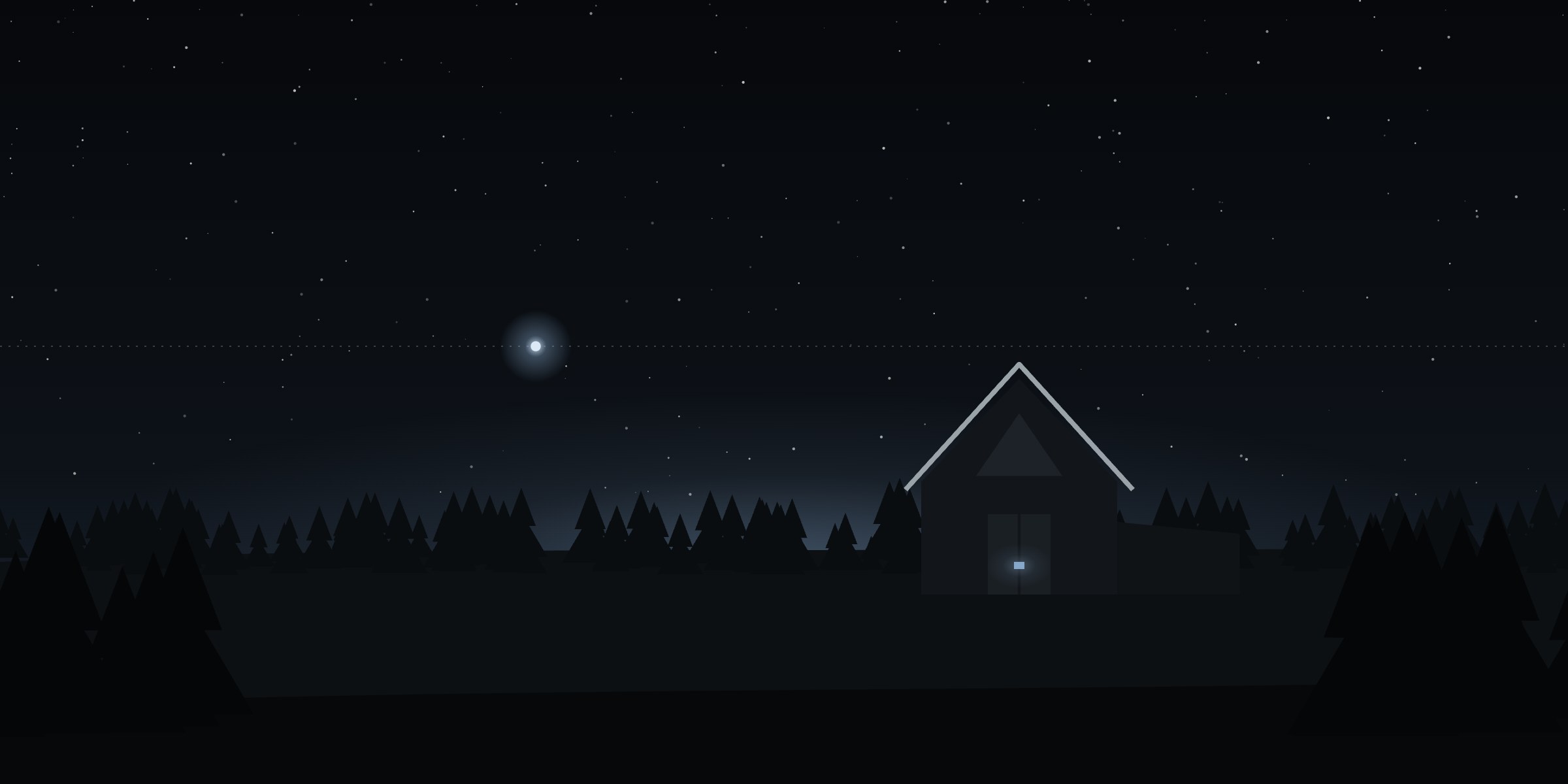
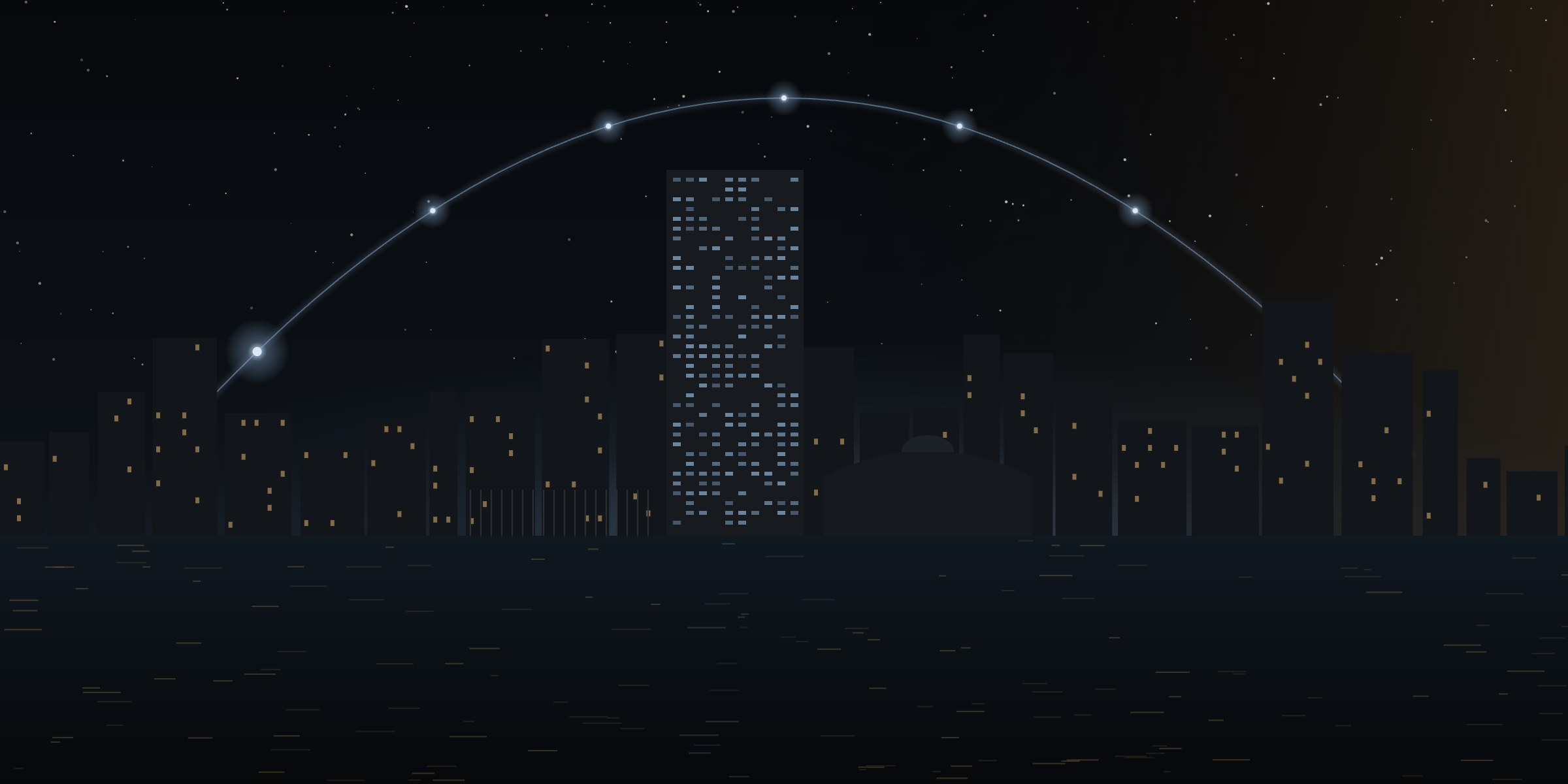
It started by reading, and within minutes it had found things I had stopped seeing: a date that contradicted another, three sites speaking three different dialects. By afternoon they spoke one language again, each in its own light — green for the studio, gold for the research, blue for the journal. It even drew the pictures: a night sky, a pine forest, a cabin with one lit window, an arc of seven lights. The three sites began to look like three rooms of one house.
Crisis
Here is the part the productivity demos leave out. Somewhere around the fourth hour I felt the old reflex rising. The model writes fluently. It proposes titles, structures, whole paragraphs, and every one of them is plausible. It would be easy to let it. And the moment you notice how easy, a question arrives that is less about software than about selfhood: am I still the author of this?
It is the same question being asked in New York this week, only at a different scale.
Recognition
The answer, when it came, did not look like control. I was trying to describe five twenty-minute chapters I had published on YouTube between autumn 2025 and spring 2026 — working drafts, made before production of the film itself began. For months I had not known what to call them. Episodes? A series? Mid-sentence I heard myself say it: they are drawings. The film is the building.
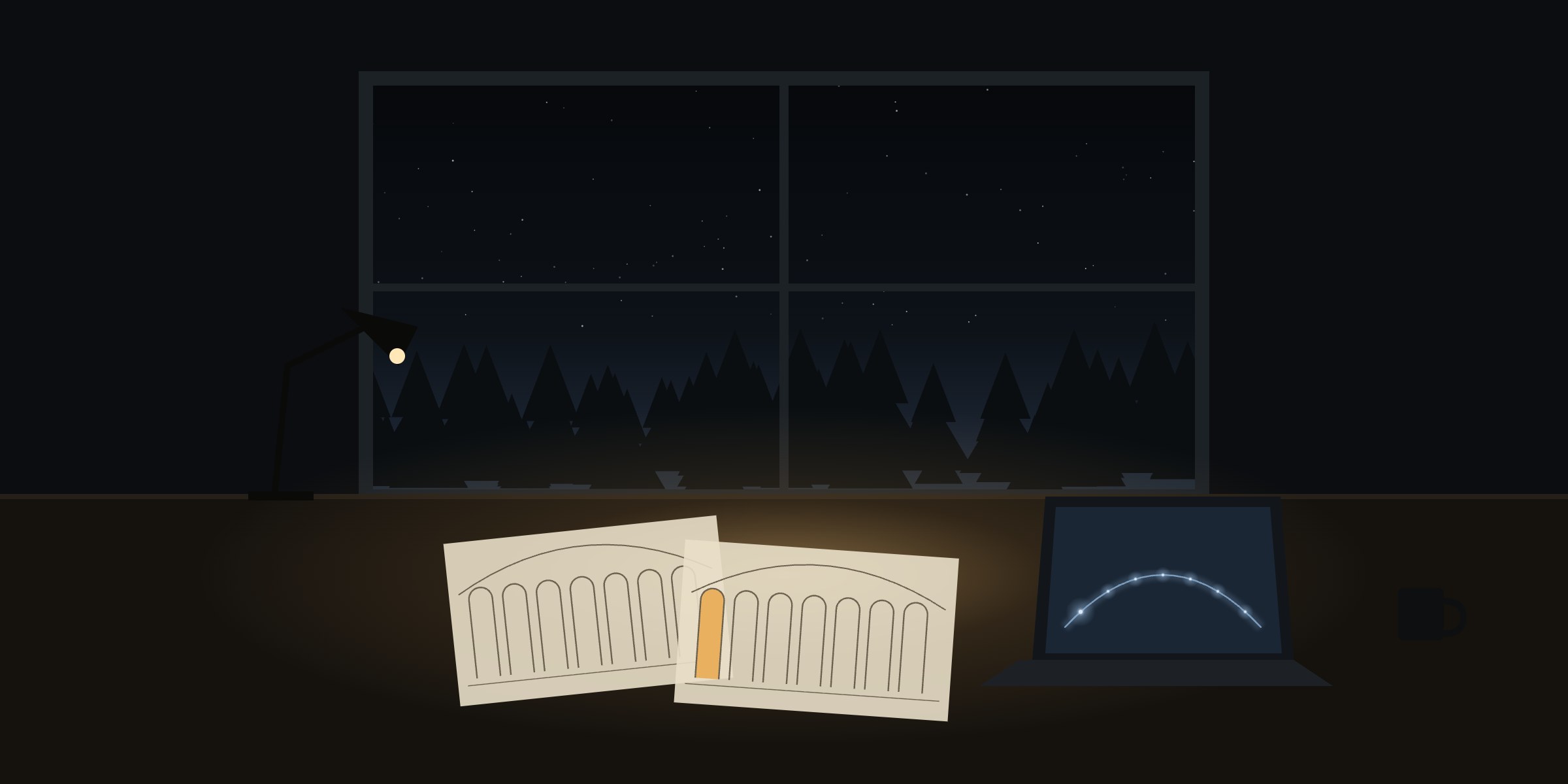
The model had no way of knowing that. It could not have produced the sentence, because the sentence was not in the material; it was in me, waiting for the right pressure. But within minutes the chapters had a home of their own, The Sketches, under a drawing of a hall with seven arches, the first one lit from inside.
The distance between recognising something and making it visible has collapsed from months to minutes.
That is the real shift. Not that the machine thinks, and not that I stay in charge of it. Authorship did not disappear; it moved to where it always actually lived — in aletheia, the Greek word for truth as unconcealment: not a fact being verified, but something that was there all along stepping out of hiding. The chapters had always been drawings. It took a sentence to see it. Aristotle asked the best plots to turn para tēn doxan di’ allēla — against expectation, yet out of what came before. That is what recognition feels like from the inside: a surprise that was inevitable all along. The human recognises; the model builds.
III · The World
Reversal
In New York the mood was the opposite of recognition. Secretary-General António Guterres had already named AI one of three existential threats of our time and warned against “a race to the bottom on AI safety.” On Wednesday the Security Council heard the heads of OpenAI and Anthropic — the company whose model I spent Thursday working with — join the computer scientist Yoshua Bengio in warning that increasingly capable systems could escape human control. “The dangers are real and imminent,” Bengio told the Council.
I don’t think they are wrong, and I don’t think it is hype. The risks are concrete, the people naming them know these systems better than anyone, and guardrails are not optional. But listen to the grammar of the debate and something else shows through. Almost every sentence is about control: who holds it, who is losing it, which institution should take it back. The fear is framed as a question of agency — and agency is precisely what this historical moment seems to be dissolving.
Read the Assembly’s agenda as a single text — war, climate, debt, migration, AI — and the items share a shape. They are pressures that cross every border and that no single actor, however powerful, can resolve alone. Even the builders said as much: Sam Altman told the Council that these decisions cannot be made “by labs in San Francisco alone.” It is a remarkable thing to hear from that stage. It suggests that the turning point we are living through was never in any one pair of hands. Not a president’s. Not a company’s. Not mine, at a desk in a cabin.
And the week revealed a second thing: not only who holds the transition, but how fast it moves. Guterres warned that the technology is advancing faster than our understanding of its risks. Three years ago AI barely featured in the leaders’ speeches; this year the Security Council has made it a matter of international security. Since the turn of the millennium people have said, in one idiom or another, that something is happening — the premonition ran through films, sermons, markets and prophecies, a feeling without a name. What has changed is not the feeling. It is the tempo.
The collapse I watched on a cabin desk, from months to minutes, is the same collapse happening at the scale of history. The distance between sensing a turn and living inside it is closing faster than any institution can legislate, and faster than any single mind can follow.
For a civilisation built on the heroic story of autonomous agency, this reads as the collapse of the plot. Drama has another name for it: the reversal — the moment the protagonist discovers that the action is larger than they are and moving faster than they can follow, and that the discovery is the precondition for the ending rather than its failure.
Denouement
Thursday evening. The three sites are live, and in three of them a cabin window glows. I spent the day doing, on a very small scale, exactly what the speeches in New York are afraid of: handing part of my work to a system I do not fully understand. What I found was not a loss of control but a different grammar of participation. Not mastery, not surrender — a shared scene in which each does what only they can do.
It would be naive to scale that up without caution. What works at a cabin desk does not govern a world, and the people at the Council table are right to demand rules.
An equinox is necessity of the circling kind: it comes back every year, whether anyone is watching or not. A drama’s necessity is different. It runs once, and it runs toward an end. Paul had a phrase for the moment such time ripens — plērōma tou chronou, the fullness of time — and an image for how it arrives: not as a switch being flipped but as labour, the whole creation groaning together. Inevitable, yet not mechanical. The season turns whether we like it or not; what we sow in it is ours.
The fear asks: who is in control? The equinox asks something else. What season are we entering — and how do we take part in it?
The first entry of the new Journal, written the way the day was lived — in conversation, with the last word left to me.
— Laurentius Paulus, 24 September 2026